


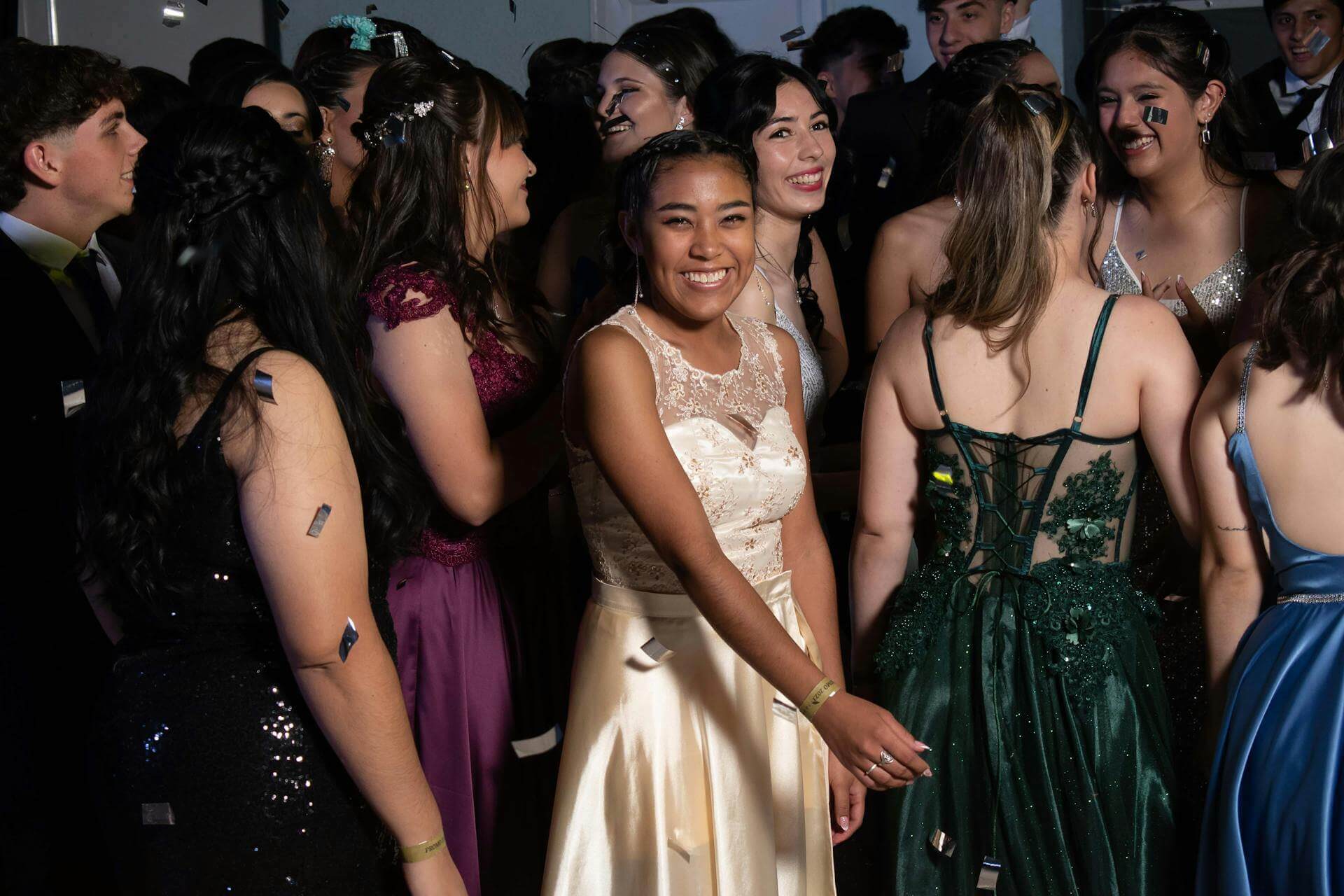
In the US, prom night is an essential rite of passage for young teenagers about to leave high school. We’re talking limo, doves, rocking the suit and wearing the spectacular suit with the corsage and telling your date’s Dad: “Don’t worry, we’ll have her home by 8” – Yeh right!
But this means prom night is big business, with 5 million teens across the US taking part each year and the industry worth around $4 billion annually.
What Are The Origins of Prom Night in the United States?
Prom, short for “promenade,” began in the United States in the late 19th century. It started as a formal event for college students where young adults could socialise and celebrate their academic achievements.
By the 1880s, high schools began adopting the tradition, with the first recorded prom held at Boston Latin School in 1880.
In these early days, proms were much simpler than they are now, focusing on dancing and polite society rather than extravagant fashion and parties.
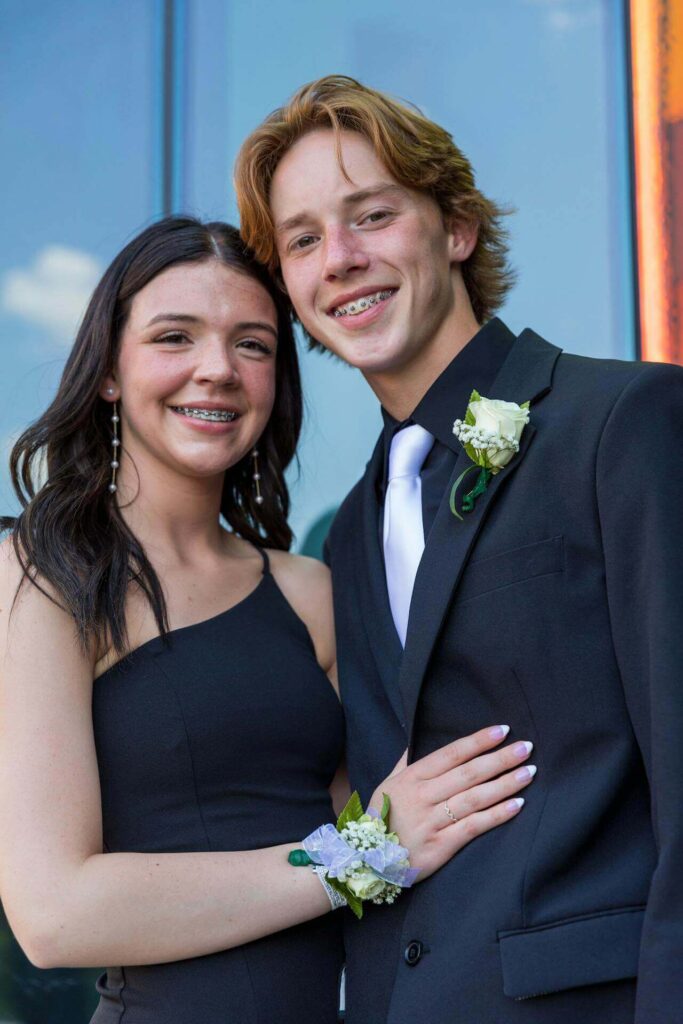
Over the decades the event became increasingly formalised, with elaborate decorations, formal attire, and traditions such as electing a prom king and queen becoming embedded in American school culture.
Today, prom marks a symbolic end to high school, blending celebration with rite-of-passage moments for students across the country.
It Isn’t A Prom Unless You Have …
- Asking someone to prom (The “Promposal”)
- The limo
- The tuxedo
- The prom dress
- The corsage
- The dance in the high school gym
- A slow dance
- The punch
- The prom king and queen
- The awkward photo
- Your prom date (sometimes taking your cousin)
- The principal chaperoning
How Many People Take Part in Proms Each Year in The US?
Prom remains one of the most widely attended school events in the United States. Recent figures show that roughly 75% of high school students take part in prom each year. This translates to over 5 million American teens attending prom annually, making it a shared experience for a large majority of seniors and many juniors too.
Attendance rates can vary by region and school, and detailed statistics by state are not always regularly compiled into a single national dataset.
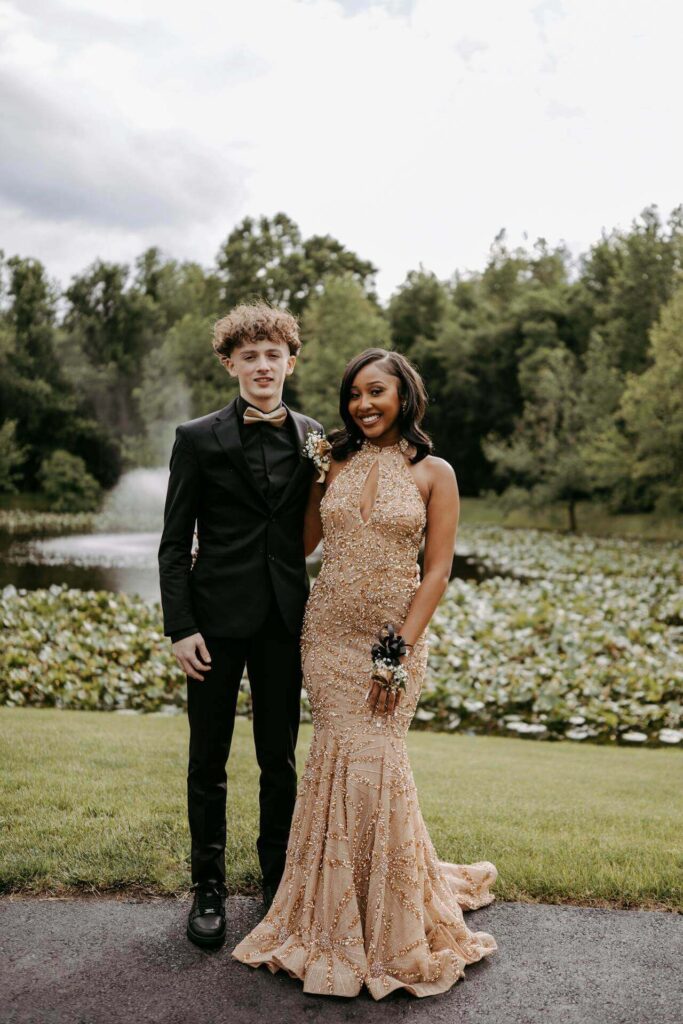
However, prom is common in nearly every state, and most schools aim to hold their prom in late spring around April and May. Certain states have well-known peak prom windows showing that, despite regional scheduling differences, the tradition spans from the Deep South to the Northeast and across the Midwest and West.
What Is The Cost of Prom Night?
Prom is often described as one of the most expensive school traditions for American families. Surveys show that the average cost of prom can be around $818 to $919 per student when all expenses are included. These figures cover attire, tickets, transport, beauty services, photos and sometimes after-parties.
| Category | Typical Cost (USD) | Notes |
|---|---|---|
| Average Total Prom Cost (Per Student) | $818 – $919 | Includes attire, tickets, transport, beauty services, photos and sometimes after-parties |
| Prom Dress | $100 – $300 | Designer or custom gowns can cost significantly more |
| Tuxedo / Suit Rental | $100 – $150 | Price depends on quality and location |
| Prom Ticket | $50 – $100 | May include food, venue hire and entertainment |
| Limousine / Luxury Transport | Several hundred dollars (group cost) | Usually split between friends sharing the ride |
| Photography | $200+ | Professional or family-hired photography packages |
| Corsage / Boutonniere | $20 – $30 each | Traditional floral accessories |
| Promposal (Invitation Gesture) | Around $300 (average) | Optional but sometimes elaborate and costly |
The clothes are a big chunk of that budget. Prom dresses generally cost between $100 and $300, though higher-end designer gowns or custom outfits can be far more expensive. Tuxedo or suit rentals for boys average around $100–$150, depending on location and quality.
Tickets to the event itself often range from $50 to $100, depending on whether food or entertainment is included. Many students also hire limousines or luxury vehicle services, which can cost several hundred dollars for a group.
Photography, whether professional or family-hired, commonly adds another $200 or more. Corsages and boutonnieres, small floral accessories traditional at prom, typically cost around $20–$30 each.
In the past, special invitations known as “promposals” became a trend of their own. These elaborate asking-to-prom gestures could sometimes cost around $300 on average, adding to the overall spend for some students.
Some Interesting Prom Night Examples
Not all proms are the same. Some schools’ proms have become community events in their own right, with parades and themes that reflect local culture. One famous example comes from Pennsylvania, where a high school’s prom was recognised for breaking a Guinness World Record for the most lipstick kiss prints on a mural tied to the prom celebration. This event drew local media attention and became part of the town’s identity.
Another notable story comes from Charleston, Mississippi, where an HBO documentary titled Prom Night in Mississippi followed the first racially integrated prom at Charleston High School. This event was significant not just for the students involved but for the broader community, highlighting how prom can intersect with wider social histories and change.
Many schools also personalise their prom nights with professional entertainment, live DJs or bands, themed decorations, and even celebrity appearances. These touches can turn what might otherwise be a standard school dance into a large, multi-hour celebration that students and families remember for years.
Famous Movies That Include Prom Night
Prom night has been a major scene in many well-known American movies. It is often shown as dramatic, romantic, funny or even scary. Here are some famous examples.
Carrie
This is one of the most iconic prom scenes in movie history. The prom turns into chaos during the famous “blood scene.” It changed how prom was shown in horror films and made prom night feel intense and unforgettable.
Mean Girls
This movie features a senior prom that focuses on high school popularity and social drama. The prom queen moment becomes a turning point in the story. It reflects how prom can represent status and identity in teen culture.
Pretty in Pink
The final prom scene is emotional and romantic. The homemade prom dress worn by the main character became symbolic of individuality and self-expression.
Footloose
The prom in this movie represents freedom. Dancing at prom becomes a symbol of breaking strict community rules.
10 Things I Hate About You
The prom brings the main characters together and wraps up the romantic storyline. It shows prom as a big social event where relationships are tested.
High School Musical 3: Senior Year
The senior prom is a glamorous celebration that highlights friendship and moving on to the next stage of life.
Prom is often used in movies because it represents change, emotion and teenage milestones.
Some Interesting Prom Night Ideas
Prom themes and creative ideas have become more elaborate over time. Schools often try to make the night feel unique and memorable.
- Hollywood red carpet theme
- Masquerade ball
- Travel-inspired themes such as “Paris Under the Stars” or “A Night in New York.” Decorations match the chosen city, and food can reflect the location.
- Outdoor proms – Beachfront or garden venues create a relaxed but beautiful setting.
- Glow-in-the-dark or neon themes are also common. Black lights, LED decorations and bright outfits create a fun party atmosphere.
- Affordable and inclusive proms. They organise community dress drives or decorate the school gym creatively instead of renting expensive venues.
In recent years, themed entrances have also become a big part of prom. Students sometimes arrive in vintage cars, tractors, boats or even helicopters. These grand arrivals often get shared widely on social media.
What is The Prom’s Cultural Significance in The US?
For teenagers in the United States, prom is more than just a dance. It represents a shared cultural experience, a social milestone that blends celebration, community and personal expression. Despite the expense, most students view prom as a defining moment of their high school experience, one that encapsulates both tradition and youth culture. With millions attending each year and the event deeply woven into school life across states, prom continues to shape memories and stories long after teens graduate – making it a cornerstone of American high school culture.
Last Updated on February 26, 2026 by Daniel Tannenbaum, Founder of Pheabs